
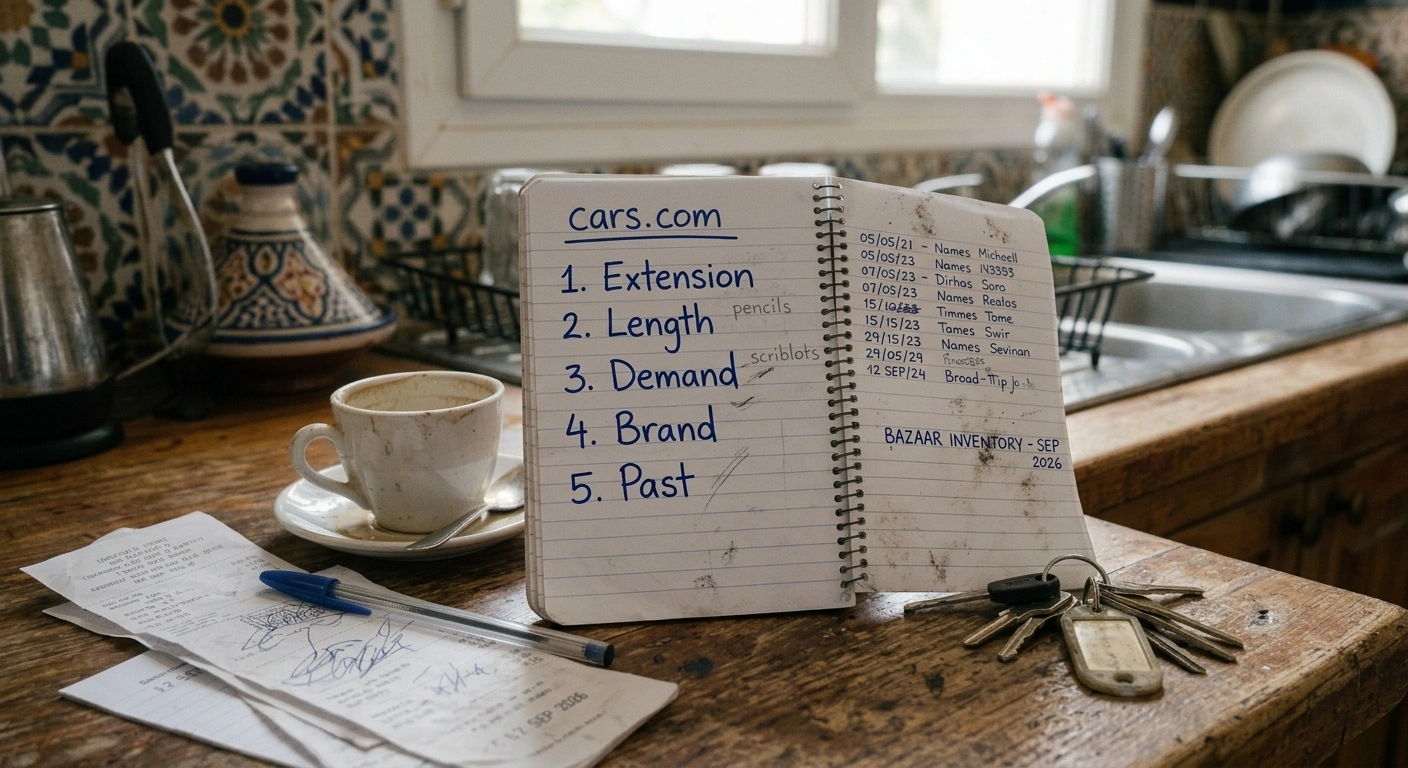
I’m Mostapha Ouha. I buy and sell names from Morocco. After a year of leftovers, I stopped asking tools for a magic number and started asking whether a stranger would print the string. Five things decide that. Our Domain Value Checker estimates some of them (length, TLD, brand, keywords, use, memory, sound, fit). It does not see history or trademarks. How the machine weights the letters: how we score. FAQ. A range, not a sale: how I value.
1. The extension
Buyers type what they already trust. Often .com. Sometimes a ccTLD that is the local product .ae when the buyer is there. A new suffix is a bet: not a replacement for a good name. The official list is IANA’s root database, not a conference slide. Choosing an ending: that guide.
2. Length and whether a human can say it
Short helps. Clear helps more. Hyphens, extra vowels, and “clever” spellings fail the radio test. Psychology of names we already trust more than a dashboard: why some stick. Generator output is not automatically inventory: that page.
3. Demand a buyer you can name
A keyword with a business behind it can help. A stuffed phrase rarely does. Intent has to match what a stranger hears: the metric will not save a mismatch. Theme lists (“AI 2026”) are how leftovers get a story: there is no secret niche list. Record sales are outliers, not your comps: what they actually show. Neighbors: NameBio, DNJournal.
4. Brand could it live on a card?
If it only works as a search query, you are holding an SEO costume, not a name. Extra spellings of the same idea are not more brand: two names, one business. For a real company: naming a business / a name that can still work after you grow.
5. A past you can explain
The checker is blind here on purpose. Snapshots: history. A backlink export is not that job: a graph is not history. Marks: WIPO UDRP, our guide. DR is not a price: that page. Expired “authority” is often poison: SEO treasures. Metrics costumes: easy to misuse.
If any of the five fails hard, do not “offset” with traffic, a CDN, or an AI yield. An AI score is not a reason to buy. Confirm you even control the name: ICANN Lookup.
Decision
Paste the name. Read the weak lines. Then history and marks. Then one number you can say out loud: before you buy / before you sell. Keep the Google row. The five factors were always the name. The rest was costume.